
Introduction
Film production has long been associated with significant carbon emissions, exacerbating resource consumption, waste generation, and extensive travel. Additionally, it has often perpetuated inequalities, particularly in film productions based in the Global South. However, “Itu Ninu,” an Indigenous Sci-fi film shot in Scotland, defies these practices. With a focus on sustainable practices and a commitment to limiting its cinematic footprint, the film proposes new approaches for environmentally conscious filmmaking.
Building a Sustainable Foundation
Prior to the shoot, the film’s producer took part in the WE ARE ALBERT training on Climate Change and Sustainable Production and training on Editorial content. This enabled the team to weave the environmental themes of the narrative effectively with the chosen modes of production.
A “Second-hand” Cinema Approach
Recognising the ecological toll of mainstream cinema, the filmmakers drew inspiration from Nadia Bozak’s concept of “Second-hand” cinema, influenced by Agnes Varda’s documentary practice of “gleaning” images. The film creatively employed available resources, mirroring Varda’s acclaimed work, La Pointe Courte. By filming scenes in existing locations, the production minimised the need for elaborate set construction, reducing waste and resource consumption. The production furthermore incorporating practices commonly found in Indigenous Cinema and community filmmaking. Filming with natural and available light not only reduced energy consumption but also enhanced the authenticity and organic feel of the visuals. A minimal crew with reduced equipment ensured efficiency while maintaining the essence of the production. Opting for walking as the primary mode of transportation to the set reduced carbon emissions and fostered a closer connection with the natural surroundings.
Choosing the Right Tools
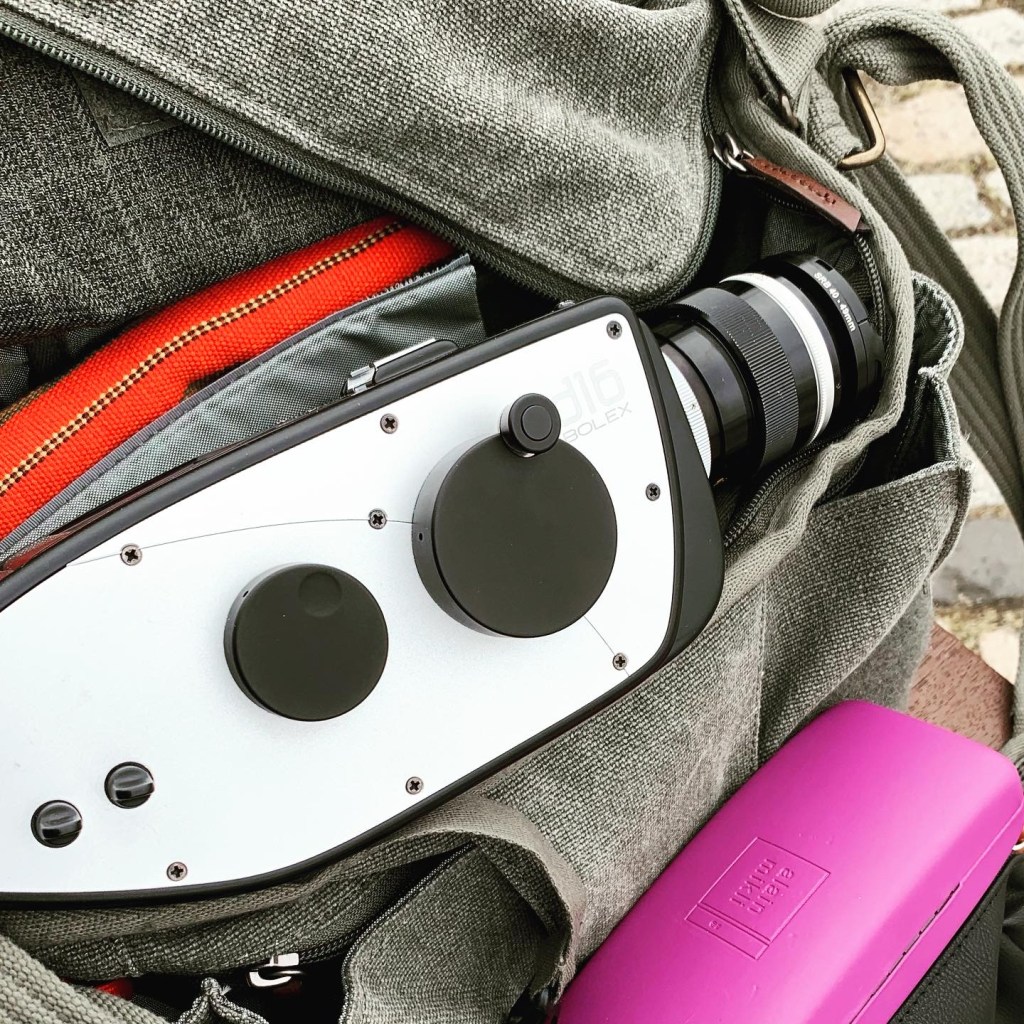
A pivotal decision in the pursuit of sustainability was selecting the Bolex D16 camera for the shoot. This decision aligned with ideas on degrowth, avoiding being swayed to film with the largest amount of K’s or employ the newest technological developments. This choice furthermore allowed the use of small vintage c-mount lenses (Kern Paillards), while the camera’s internal battery and drive minimised reliance on external power sources. This compact and versatile kit ensured a small ecological footprint without compromising the film’s visual quality.


A Circular Wardrobe
In line with the film’s sustainable ethos, wardrobe and costumes were carefully sourced. Local charity shops provided a treasure trove of options, reducing the demand for newly manufactured garments. Additionally, the filmmakers utilised their existing collection, giving a new life to previously owned items. By embracing a circular wardrobe approach, the production exemplified sustainable fashion choices. Items that were not kept by cast or crew were donated back to charity at the end of the shoot.


Measuring the Footprint
To effectively track the environmental impact, the project employed ALBERT’s carbon calculator tools. The final carbon footprint of “Itu Ninu” amounted to approximately 1 tonne CO2e. This remarkable achievement stands in stark contrast to the industry average of 2800 tonnes for mainstream productions and even the footprint of smaller independent films, which typically ranges from 100 to 300 tonnes. The film’s reduced carbon emissions showcase the remarkable success of its sustainability efforts.
Conclusion
By embracing a “Second-hand” cinema approach, drawing from Indigenous Cinema practices, and employing sustainable tools and techniques, the film has created a compelling narrative while minimising its environmental impact. Itu Ninu serves as a testament to the power of sustainable filmmaking and the potential for positive change; it hopes to challenge current industry norms and to inspire others to adopt eco-friendly practices.

 Itu Ninu
Leave a comment