
Introduction
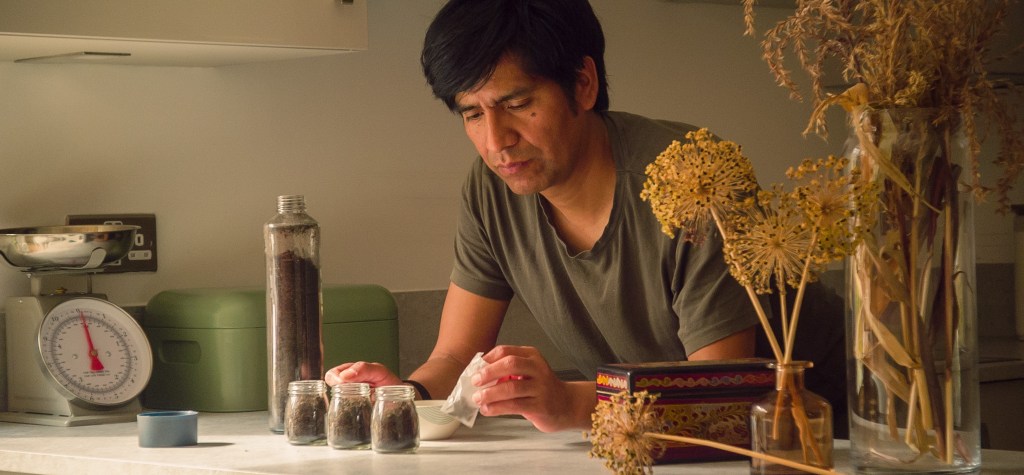
Ángel is a climate migrant from an Indigenous (Mixtec) community in Mexico in the year 2084. The story reveals that he used to be a farmer but had to leave his place of origin due to excessive draughts. Despite his displacement, Ángel carries with him the invaluable knowledge of seeds and cultivating plants. Through Ángel’s story, we wanted to reflect on the possible impacts of climate change on food security.
Climate Change and Food Security
The phenomenon of climate change has far-reaching implications for global food security as it impacts and alters the interdependence between nature’s elements. It is assumed that plants we consume on a daily bases such as coffee and cacao may disappear or become endangered within the next 100 years due to climate change. The effects of climate change will be strongly felt by agricultural communities and Indigenous Peoples.
Droughts and excessive heat become increasingly prevalent as climate change intensifies, rendering once-fertile lands inhospitable for many plant species. Ángel’s experience as a farmer-turned-migrant thus becomes a metaphor for the struggles faced by individuals who must leave their ancestral lands behind due to environmental degradation.

Climate change also exerts a detrimental influence on bee populations, disrupting the delicate balance of pollination. Studies have indicated a decline in bee populations due to factors like habitat loss, pesticide use, and extreme weather events. These changes ultimately result in reduced pollination rates, leading to lower crop yields and decreased biodiversity. To highlight this issue, the film recurrently includes different images of bees.


The impact of climate change extends beyond pollination, affecting the dispersal of seeds by various animals. Many plants rely on animals for seed dispersal. Declining populations of migratory species, for instance, can hamper seed dispersal over vast distances. By depicting the struggles faced by Ángel in nurturing diverse plant species in his new environment, we wanted to draw attention to the challenges faced by plants in the context of changing climatic conditions.
Conclusion
Although Itu Ninu is a fictional film, we searched for ways to convey the interconnectedness between climate change, food security, and the preservation of traditional knowledge. By incorporating evocative visuals of bees, plants, and seeds, the film captivates viewers and encourages them to reflect on these pressing issues. Ángel’s character embodies the resilience and wisdom of indigenous communities, highlighting the invaluable role they play in safeguarding agricultural heritage and sustainable practices.
 Itu Ninu
Leave a comment