
Enrica Sciandrone’s Background
Enrica Sciandrone, the talented composer behind the original music for Itu Ninu, brings an impressive musical background to the table. Enrica is an award-winning composer, whose talent has been recognised by legendary composers such as Ennio Morricone, Luis Bacalov and Ryuichi Sakamoto. Since 2009 she has been living in London, where she got in contact with the high-profile world of the international film music industry. She has composed soundtracks worldwide for several films, documentaries, animations, TV commercials and libraries (EMI-KPM). Recent credits include additional music for A Discovery of Witches – III, and the soundtrack for the feature documentary 512 Hours. Her music and arrangements have been broadcasted on BBC Radio 3 (UK), Radio Rai 3 (Italy), Amazon Prime Video, Netflix, Channel 5, ITV, BBC, to name a few.
Initial Collaborations
Itandehui and Enrica first met in 2012 while attending the Berlinale Talents. Serendipitous encounters at various festivals eventually led them to collaborate on the film In Times of Rain in 2018, where Enrica composed an excellent music score. This collaboration prompted them to continue working together on various projects, including the short film Kii Nche Ndutsa (Time and the Seashell).
Itandehui observes about their creative collaboration:
“Since working together on In Times of Rain I’ve always enjoyed collaborating with Enrica. Her music is incredibly moving and really brings additional layers of meaning and emotion to the film. I’m always looking forward to receive ideas, concepts or initial cues from her. And it’s a wonderful moment when the recorded music is added to the film.”
The Themes for Itu Ninu
When reflecting on Itu Ninu, Enrica shares her inspiration behind the music:
“After watching the first cut of the film, I found myself on the tube, contemplating how to capture a sense of newness, freedom, longing, and hope within a dystopian future. Typically, I don’t listen to music while on the go, fearing it might distract me and cause me to miss my stop. However, that day, I had my headphones on, indulging in Schumann’s Andante Cantabile from his piano quartet op.47. Observing everyone absorbed in their smartphones during the bustling rush hour, an epiphany struck me. I felt disconnected from the monotonous, grey reality surrounding me. Through Schumann’s music, I embarked on a vivid, emotional journey—soaring above the bleak, lifeless environment. That was it. That’s when the main theme came to me.”
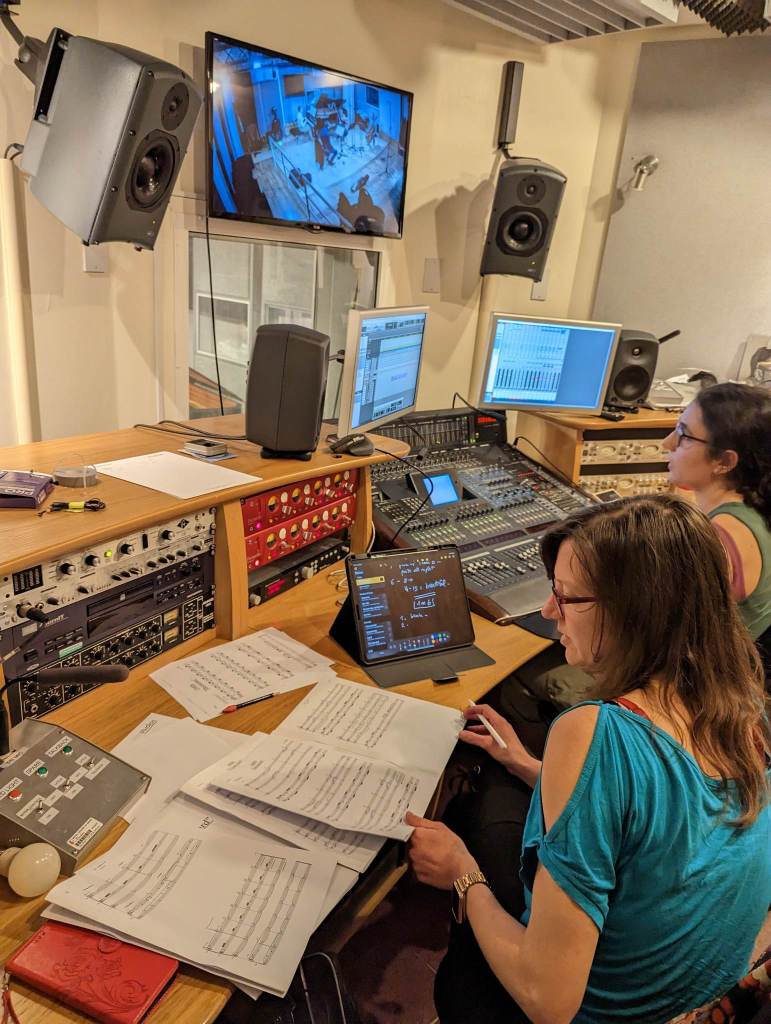
The music in Itu Ninu revolves around two primary themes. The first symbolizes true freedom, delicately unfolding as a classical chamber piece, emanating tranquility and steadfastness. The second theme represents the yearning for change, interwoven with textured electronic sounds.
Enrica Sciandrone’s remarkable talent and extensive experience in composition for screen have enriched Itu Ninu’s cinematic experience. Through her intricate melodies and thematic choices, she masterfully evokes emotions, expressing a sense of longing and hope within the film’s dystopian world.
 Itu Ninu
Leave a comment